Four practices, backed by the What Works Clearinghouse, explained plainly for pre-K teachers and written in everyday language for families. Free, and built to be used tomorrow morning.
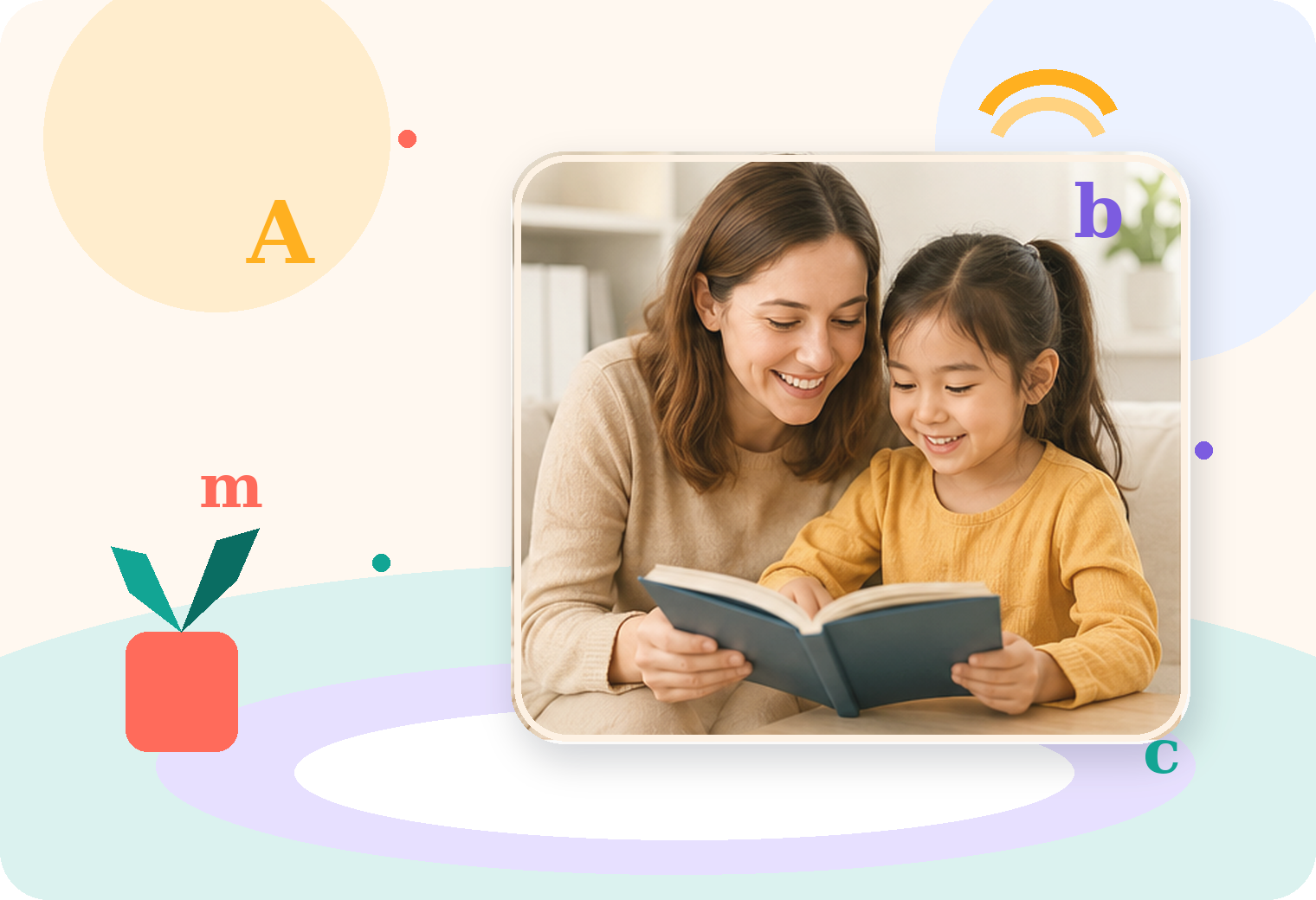
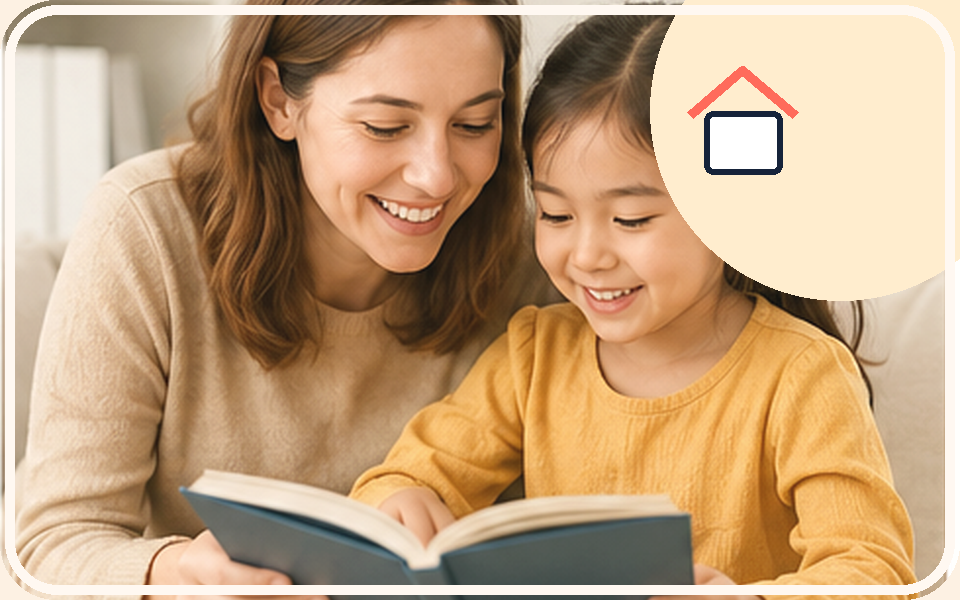
The same four practices sit underneath both paths. What changes is how much research you get, and how quickly you get to something you can do this afternoon.

You don't need to be a teacher, buy anything, or set up a lesson. Everything here fits in the car, the bath, and the ten minutes before bed.

The full scope and sequence for each practice, the research behind it, and sample activities you can drop into tomorrow's small group.
Emergent literacy is not early phonics. These are the four things a child builds between birth and five that make learning to read possible later.

Hearing and playing with the sounds inside spoken words.

Knowing letter names, letter sounds, and how letters are formed.

Building the vocabulary and conversation that reading comprehension rests on.

Understanding how books and printed words work.

The four practices, what the research says, and how to teach each one step by step.

53 short clips of real teachers and parents modelling each skill in action.

Printables and activities for whole group, small group, centers, and home.

Assessments, modules, and further reading for teachers and program leaders.

500 Pre-K words across ten everyday themes, with real photos and a friendly voice in English, Spanish, and Amharic. Children hear each word, say it back, and find it in a picture — no reading required, and nothing to buy.
Start with Oral Language. It is the practice that predicts later reading comprehension most strongly, and it costs nothing but conversation.
A free, research-based home for the four practices that build readers before reading begins — written for preschool and pre-K teachers and the families they partner with.